
Car Seats and Carrying Kids: Back Pain Tips for Centennial Parents
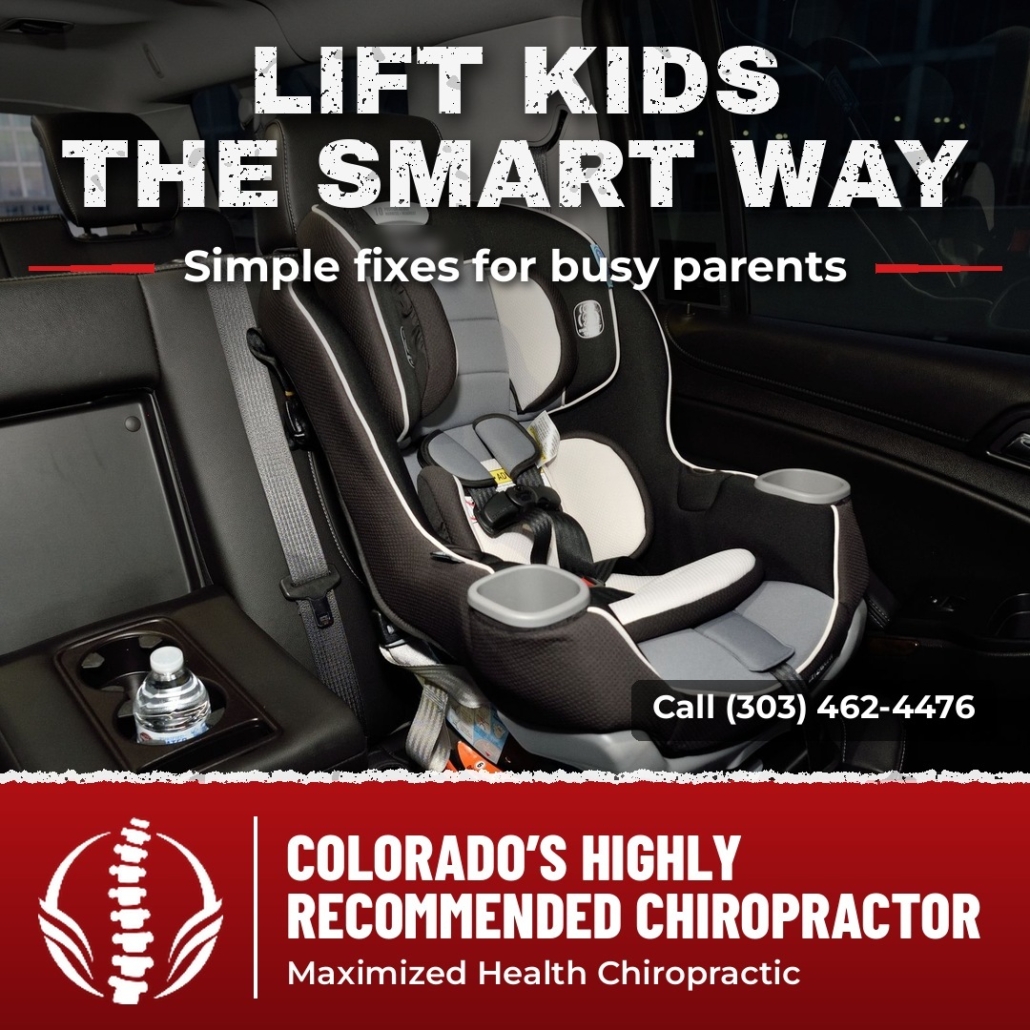
Little kids do not stay little for long, but for a few years a lot of lifting comes with them. Clicking an infant carrier into its base, buckling a toddler into a car seat, and carrying a sleepy child in from the car can add up to dozens of awkward lifts a day. Many parents in Centennial and across the south Denver metro tell us their back, neck, or shoulders feel it by the end of the week. A few small changes can help you lift kids the smart way.
Why car seats and carrying kids are hard on your back
Most of these lifts happen in the worst possible position. You lean into the back seat, reach your arms out, twist, and lift a load that wiggles. An infant carrier weighs a lot more once the baby is in it, and it is usually held out to one side. Toddlers end up on the same hip again and again. Add cold mornings, bulky jackets, and a rush to get out the door, and it is easy to see why the low back, mid-back, and neck get tight.
Six simple fixes for busy parents
- Get in closer. Instead of reaching in from the doorway, put one knee on the seat or stand right next to the car seat so the child is close to your body before you lift. The farther the load is from you, the harder your back works.
- Turn with your feet, not your spine. Lift first, then step and pivot your feet to turn. Twisting while lifting is one of the most common ways people tweak their low back.
- Carry the infant seat in front. Hold the carrier in front of you with both arms when you can, or use the crook of your elbow close to your body. If you carry it on one side, switch sides every time.
- Switch hips. Make a habit of carrying your toddler on your less-used side, and avoid jutting one hip out for long stretches. A carrier or stroller is a good option for longer walks.
- Brace before you lift. Bend your knees, tighten your belly a little like you are about to cough, and breathe out as you lift. It takes one second and protects your spine.
- Give your back a reset. A couple of times a day, try a gentle standing back bend with hands on your hips, a few shoulder rolls, and a slow chin tuck. Our top 3 low back stretches are a great five-minute routine after bedtime.
Cold mornings can make that first lift of the day feel worse. Our morning back stiffness tips can help you loosen up before school drop-off.
When to get checked
Some soreness after a busy day of carrying is common and often settles with rest and movement. If pain keeps coming back, lasts more than a few days, or spreads into an arm or leg with numbness or tingling, it is worth having it looked at. Sudden severe pain, weakness in a leg, or loss of bladder or bowel control should be checked by a medical provider right away.
🔑 Insider Secret
Insider secret: Most aches and pains have a biomechanical cause, meaning something in how your body moves or carries load. If that cause isn’t found and addressed, the problem often keeps coming back. That’s why so many people get only partial relief, even after seeing other providers. At Maximized Health, every new patient gets a detailed biomechanical analysis, including X-rays when needed, so we can find the root cause and build a plan around it.
Our team helps parents and families from Centennial and across the south Denver metro feel their best, and we are grateful for 500+ five-star Google reviews from our neighbors. If lifting car seats and carrying kids is leaving your back, neck, or shoulders sore, call (303) 462-4476 or visit Maximized Health at 7384 S Alton Way Suite 102, Centennial, CO 80112. We are open until 6:00 PM. Here is what to expect on your first visit.